Reviewing the Christmas Lights Moose Clipart for Embroidery
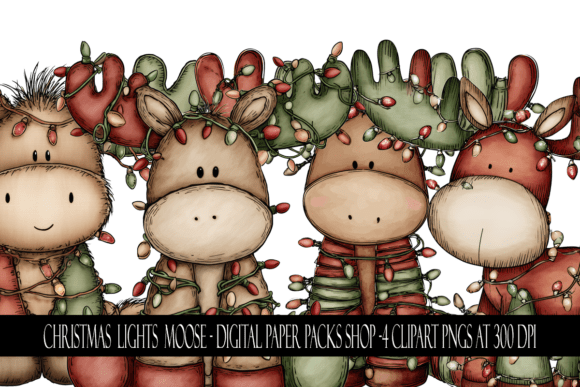
As a designer who has spent countless hours staring at digitized files on a screen and even more hours watching needles punch through fabric, I have learned that not every pretty picture translates into a quality machine embroidery design. When I first pulled up the Christmas Lights Moose Clipart, my initial reaction was one of cautious optimism. The whimsical nature of a moose adorned with festive string lights is undeniably charming, fitting perfectly within the popular niche of holiday-themed Illustrations. However, charm alone does not make a viable product for an Etsy seller or a boutique owner. We need to know how it stitches, how it wears, and how it sells.
First Impressions and Visual Personality
The visual personality of this clipart leans heavily into cozy, rustic holiday vibes. It is not overly complex, which is often a blessing in the embroidery world. Complex gradients and tiny details in digital art often turn into muddy messes when converted into thread. This design appears to have clear, defined shapes. The moose silhouette provides a strong anchor, while the string lights offer opportunities for playful color variation. For a craft business owner, this balance is crucial. It is detailed enough to look professional but simple enough to stitch reliably across various fabrics.
The mood it creates is warm and inviting. It feels like something you would see on a cabin door or a knitted sweater in a holiday movie. This emotional connection is what drives sales for personalized gifts and handmade products. Customers are not just buying a stitched image; they are buying a feeling of nostalgia and comfort. If the design retains this feeling after being punched out by a machine, it is a winner.
Real-World Application: The Tote Bag Test
To truly evaluate the Christmas Lights Moose Clipart, I mentally placed it on a canvas tote bag. This is a staple item for many small shop products during the holiday season. On a natural cotton canvas, the design would need strong contrast. I imagined using deep forest green or navy for the moose body and bright reds, golds, and whites for the lights. The result would be a striking tote bag design that stands out against the neutral background.
However, the application changes if we move to sweatshirt embroidery. Here, the texture of the fleece or French terry becomes a factor. The design must have sufficient stitch density to prevent the fabric from showing through the fill areas, but not so much density that it causes puckering. A moose shape with too much internal detail might get lost in the nap of the fabric. In this scenario, simplifying the light bulbs into larger satin stitch elements rather than tiny running stitches would ensure clarity. This is where the distinction between a digital embroidery file and a raw clipart image matters. If you are digitizing this yourself, you must account for the fabric texture.
Considerations for Small Hoops and Curved Surfaces
One area where this design requires careful planning is in smaller applications, such as embroidered patches or caps. If the original clipart is scaled down significantly for a 4x4 hoop, the individual light bulbs may become indistinguishable blobs. For hat embroidery, the curved surface adds another layer of difficulty. The design needs to be centered perfectly, and the stabilizer choice becomes critical. A cut-away stabilizer is often necessary for caps to maintain shape, especially if the moose design uses heavy fill stitches.
Additionally, when working on curved surfaces like baby hats or sleeves, the aspect ratio of the moose must be preserved. Distorting the image to fit a narrow space can make the moose look stretched or unnatural, ruining the aesthetic appeal. For baby embroidery, softness is key. Using softer threads and ensuring there are no dense, scratchy satin stitch borders around the entire design will make the final product more comfortable for sensitive skin.
Commercial Viability and Brand Consistency
For commercial embroidery projects, consistency is everything. If you are building a brand around rustic holiday decor, the Christmas Lights Moose Clipart fits seamlessly. It can be used across a range of products, from kitchen towels to pillow covers, creating a cohesive collection. This consistency builds customer trust. When a buyer sees the same high-quality design on multiple items, they perceive the brand as professional and reliable.
However, before listing any digital embroidery file or finished item, you must verify the licensing. Just because a clipart is available for download does not mean it is cleared for commercial use in embroidered goods. Many design assets have restrictions on physical product sales. Always read the terms carefully. If the license allows for commercial use, this design has high potential for buyer engagement due to its seasonal relevance and broad appeal.
Practical Designer Notes for Execution
Before you commit to stitching this design on a client’s expensive garment, follow these practical steps:
- Test on Scrap Fabric: Always run a test stitch-out on the same type of fabric you intend to use. This reveals issues with tension, density, and registration.
- Check Thread Color Contrast: Use a black and white mockup to ensure the design holds its shape without color. If the lights disappear in grayscale, they may be too subtle in real life.
- Review Stitch Density: Ensure the fill stitches are not too dense for lightweight fabrics like tea towels or thin cottons. Adjust the underlay if necessary.
- Confirm Hoop Size: Make sure the design fits comfortably within your hoop with adequate margin for stabilization.
- Use Proper Stabilizer: Match the stabilizer to the fabric. Tear-away for stable woven fabrics, cut-away for knits and stretchy materials.
- Inspect Small Details: Zoom in on the digitized file. Are the light bulbs distinct? Are there any unnecessary jump stitches that could cause tangling?
In conclusion, the Christmas Lights Moose Clipart offers a delightful foundation for holiday-themed projects. Its success lies not in the digital image itself, but in how thoughtfully it is translated into thread. By considering fabric texture, stitch density, and end-use functionality, designers can transform this charming illustration into a high-value finished product. Whether for a custom gift or a best-selling Etsy listing, attention to technical detail ensures that the whimsy of the design survives the rigors of the embroidery machine.